
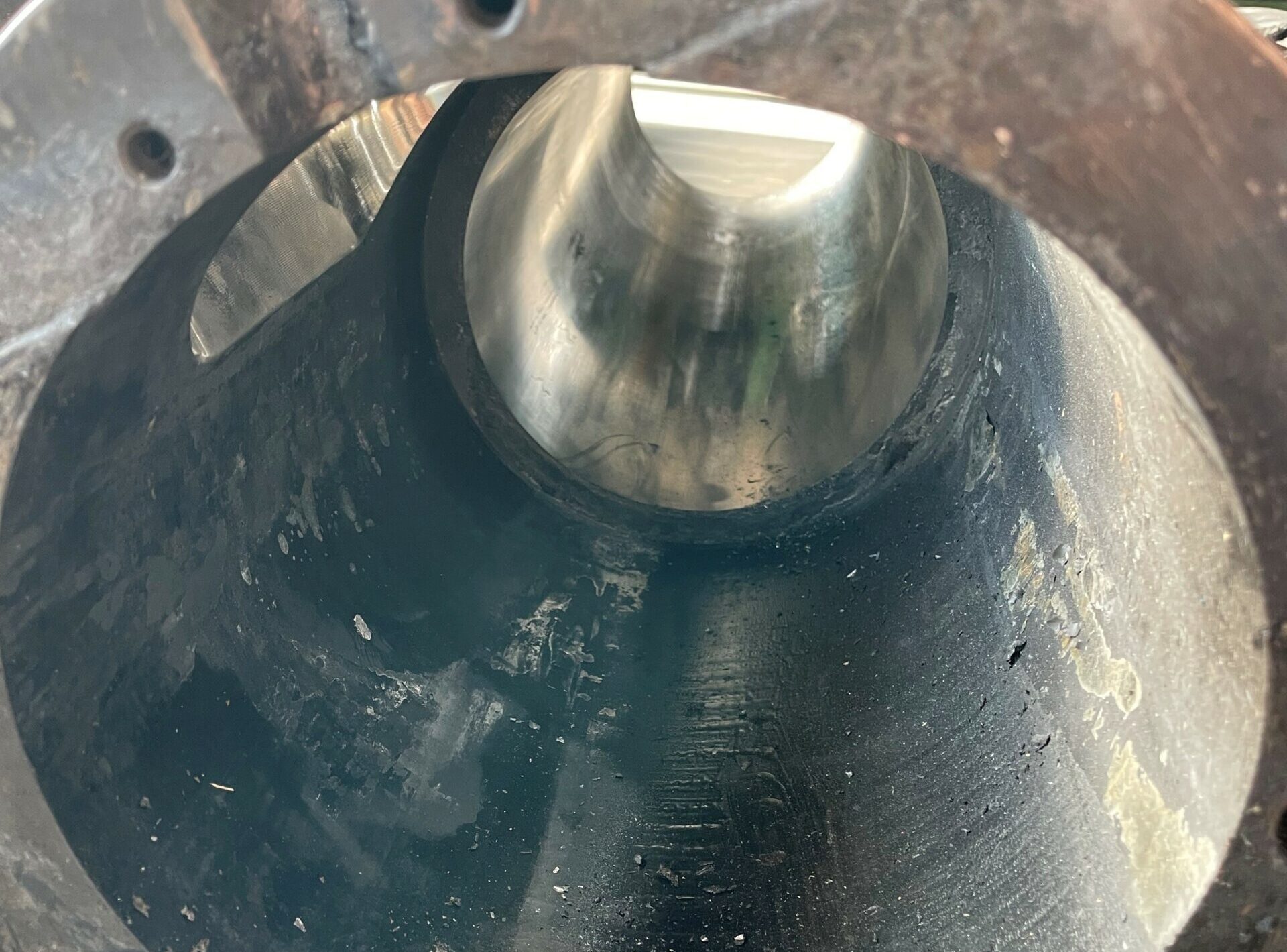
Detect wear, plan early maintenance, avoid failures: With comprehensive condition monitoring of technical components, industrial companies can prevent unforeseen disruptions. Sensors attached to the machines collect specific data, such as temperature, vibrations, or noise levels. An AI algorithm can recognize patterns in the data series that indicate an increased probability of failure. Once a certain probability is reached, the parts are then replaced. Weier GmbH from Drolshagen specializes in the repair of cylindrical components. In cooperation with the Mittelstand-Digital Zentrum Ruhr-OWL, a transfer project was implemented in which the partners piloted condition monitoring for shot sleeves used by customers.
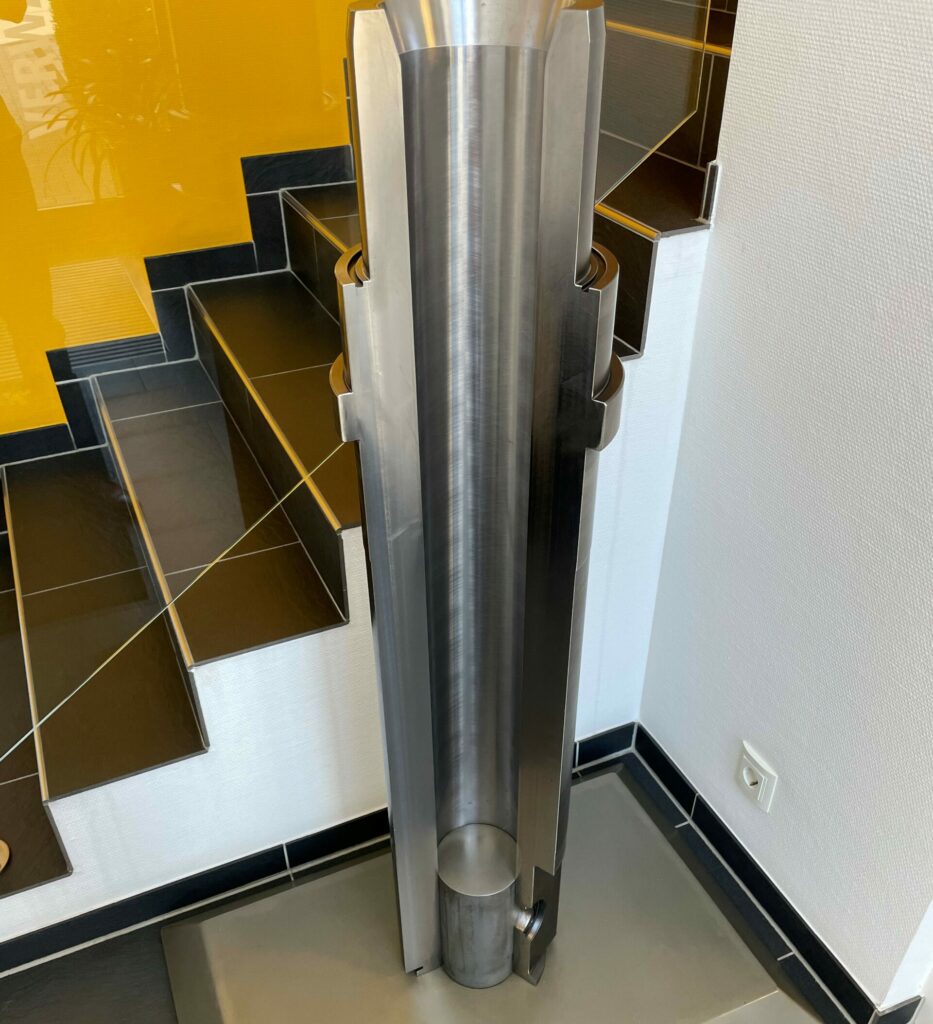
Melt, fill, and – shoot: Aluminum die casting shot sleeves are used up to 1,400 times a day to inject liquid metal under high pressure into steel molds. Weier GmbH, once a small hardware factory, is now considered a leader in the repair of such shot sleeves, especially in aluminum and magnesium die casting. This way, Weier offers a sustainable alternative to purchasing new components. “Collaboration with our customers is central. Our expertise and modern machinery enable us to offer cost-effective and ecological solutions,” explains Justin Wagner, sales representative at Weier GmbH.
Predicting Wear of Shot Sleeves
Aluminum die casting shot sleeves are subject to natural wear and tear due to constant stress. “The hot aluminum and high pressures in the shot sleeve cause these components to wear out eventually,” says Wagner. These damages result in inefficient processes, inferior product quality, and unscheduled maintenance costs in the order of several thousand euros for customers – sometimes multiple times a week. Until now, this wear could only be vaguely predicted. This is where the project came in: the goal was to develop a system that monitors the condition of the shot sleeves and detects signs of wear early.
Harry Fast, a research associate at Fraunhofer IOSB-INA, explains: “Through our close collaboration with Weier and its customers, we have found that the wear process varies in speed among different companies. This is due, among other things, to individual production conditions. Therefore, we wanted to create a system that helps companies maximize the lifespan of their shot sleeves.” Because in addition to unforeseen failures, shot sleeves replaced too early also cost time and money.
Measurement Boxes Provide the Data Basis
The project goal was clearly defined: a sensor-based system was to be developed to better understand and predict the wear process of the shot sleeves, even remotely. The project team first defined the requirements and developed a concept for what such a system could look like. This included the selection of sensors, the data processing platform, and the overall architecture of the solution.
The core of the project was the development of so-called “measurement boxes,” which were installed at three Weier customers. These boxes reliably collected vibration data generated by movements in the shot sleeves over a period of five months. This data was transmitted via LTE to the Fraunhofer Institute in Lemgo. Here, it formed the basis for an AI model that was intended to predict the wear process – but at the same time, it also posed one of the biggest challenges of the project: “We knew that a lot of data would accumulate. Processing it required careful planning and was quite time-consuming,” says Fast. “Nevertheless, thanks to the stable transmission, we were able to achieve a good result here.”
Another hurdle was the so-called “labeling” – assigning the collected data to specific conditions of the shot sleeve: At the time of recording, no direct correlation to the vibration data was established. The company had to evaluate the chamber condition itself or document events such as quality degradation. The correlation with the vibration data was then to be learned by the AI model.
Despite these challenges, the team achieved impressive results: “Looking back, we achieved an accuracy of 95% when it came to predicting the wear process of a single shot sleeve,” reports Fast. However, the transferability of the models to other shot sleeves proved difficult. “While we could make very precise predictions for one shot sleeve, the hit rate for predicting others was only 50%. This shows us that we still need more data to further improve the model.”
The Outlook: More Data, Better Results
The insights gained provide an important basis for Weier and the participating companies to further optimize the repair of shot sleeves. For example, the project team plans to collect even more data and further train the AI model. The raw data could also be analyzed more finely to gain additional information.
Furthermore, the developed system could also be used in other areas, explains Fast: “The measurement boxes are designed so that they can also be used in other wear processes. Wear processes can often be detected through vibration analyses, which opens up many more application possibilities for us.”
The cooperation between Weier GmbH and the Mittelstand-Digital Zentrum Ruhr-OWL has shown how versatile and valuable digitalization is for medium-sized companies. “We have laid an important foundation here,” summarizes Justin Wagner. “Even though there are still challenges, we are on the right track. The data and insights gained will help us to monitor the wear of shot sleeves even better and thus further increase efficiency.”